


Installing a Home EV Charging Station
Share this Post:
Share on Facebook
Share on Twitter
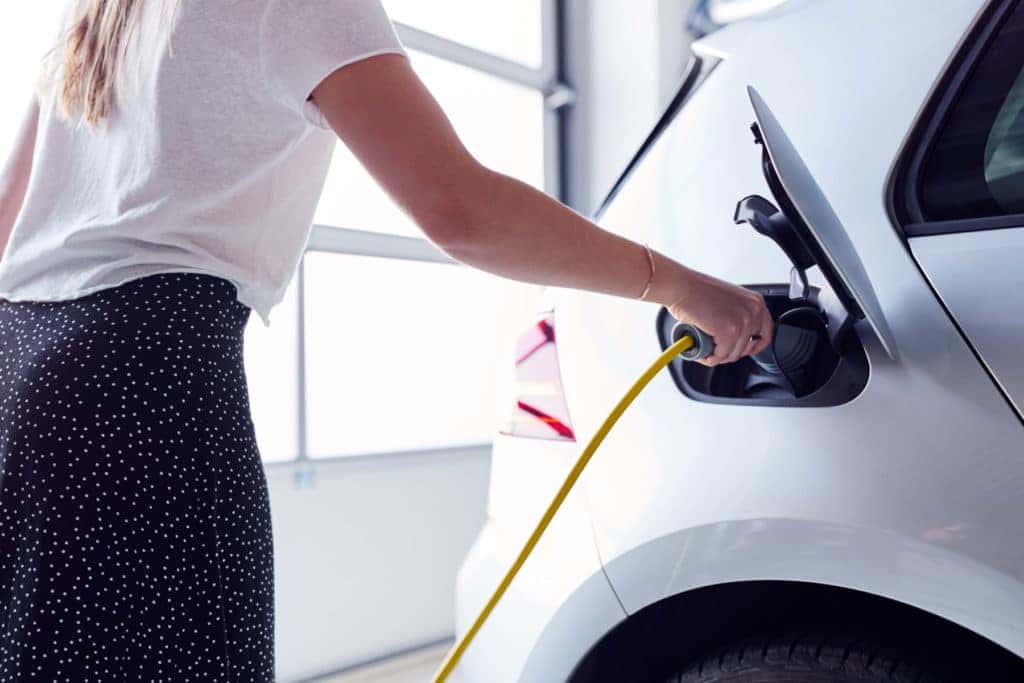
Attention, EV enthusiasts — if you’ve been thinking about installing a home EV charging station, read this first. There’s a lot to consider before adding serious electrical equipment to your home. Let’s explore your EV charging options and when it makes sense to step up your at-home charging game.
What Types of EV Charging Stations Are There?
There are three types of charging stations you’re likely to interact with as an EV owner.
Level 1 chargers are the least complex and most accessible type of EV chargers — they can be plugged into a common 120-volt outlet to fuel up your car. This type is also the slowest and least powerful, adding only two to five miles of driving range to your vehicle every hour.
Level 2 chargers amp up the potential of your at-home fueling. This charger type can be installed in your garage or to an exterior wall of your home, where it will fully charge your vehicle in eight to 12 hours. There are also over 35,000 Level 2 public charging stations available around the country.
Level 3 or DC Fast chargers are far too powerful to hook up to your house, but there are plenty of public stations you can use. A DC Fast Charger can fill your empty battery up to 80% in as little as 30 minutes, and you can expect a full tank in 40 to 60 minutes.
Which Should I Choose?
That depends. If you’re willing to wait longer for a full charge, you’ll enjoy the no-frills convenience of the Level 1 charger. But if you’re out and about a lot, you’ll want to take advantage of public charging stations or get a Level 2 charging station installed at home.
Can I Install a Home EV Charging Station by Myself?
Nope — this is one DIY you shouldn’t take on. Always hire a certified and experienced EV charger installer to hook up your at-home Level 2 charging station.
Posted in Uncategorized

0 comment(s) so far on Installing a Home EV Charging Station